


How can we optimize the ventilation design of shoe cabinets to prevent the accumulation of internal odors and maintain a good user experience?
Release Time : 2026-03-03
As frequently used storage furniture in the home, the ventilation design of a shoe cabinet directly affects the user experience, especially during humid or rainy seasons. Accumulated odors not only damage indoor air quality but can also breed bacteria, harming shoe health. Optimizing shoe cabinet ventilation requires a comprehensive approach encompassing structural layout, material selection, airflow guidance, auxiliary devices, daily maintenance, and smart technology to create a systematic solution.
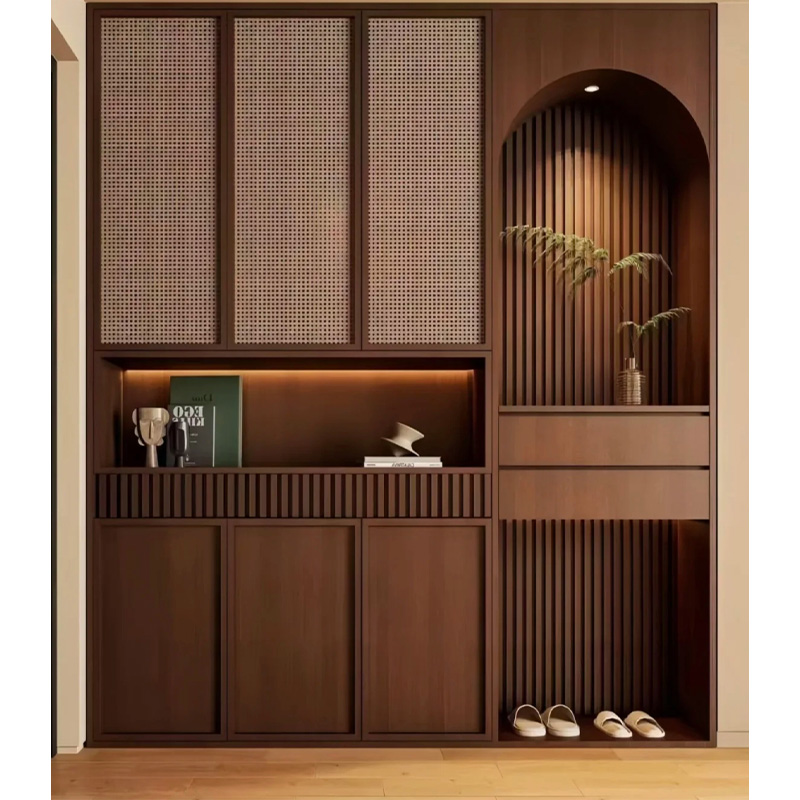
The structural layout of a shoe cabinet is the foundation of its ventilation design. Traditional enclosed shoe cabinets easily create air "dead zones," leading to odor retention. Optimization can employ a layered, staggered design, leaving gaps between each shelf to create natural airflow channels. For example, slightly lowering the front of a shelf than the back allows gravity to cause air to sink naturally, creating convection circulation. Additionally, ventilation slots or perforated back panels can be installed at the back of the shoe cabinet to avoid complete contact with the wall, reducing airflow resistance. For built-in shoe cabinets, ventilation openings should be provided at the top or bottom to connect with indoor air conditioning or fresh air systems, enhancing air exchange efficiency.
Material selection is crucial to the ventilation performance of a shoe cabinet. The cabinet material should ideally be made of breathable natural wood, such as pine or oak, whose natural pores facilitate air circulation. If engineered wood is used, choose products with high environmental standards and treat the surface for breathability, such as by drilling or grooving. Cabinet doors can partially utilize louvered or mesh doors, maintaining aesthetics while enhancing airflow. Internal shelves can be made of metal or plastic mesh instead of solid wood, reducing airflow obstruction. Furthermore, avoid using non-breathable materials like plastic film for the shoe cabinet lining to prevent odors from being trapped in the space.
Airflow guidance is key to optimizing ventilation. The shoe cabinet can be equipped with deflectors or sloping designs to guide air in from the bottom and out from the top, creating a "chimney effect." For example, an air inlet at the bottom and an exhaust vent at the top can utilize the principle of rising hot air to accelerate odor removal. For deeper shoe cabinets, small fans or exhaust fans can be installed inside to force airflow. Fan placement should be strategic to avoid direct airflow onto shoes, which could cause deformation, and low-noise fans should be chosen to minimize disruption to daily life. In addition, activated charcoal or bamboo charcoal bags can be placed inside the shoe cabinet to help absorb odors, but they need to be replaced regularly to maintain their effectiveness.
Auxiliary devices can further improve ventilation efficiency. Intelligent sensor-based ventilation systems can automatically activate fans based on the humidity or odor concentration inside the shoe cabinet, achieving precise ventilation. For example, when the humidity sensor detects that the humidity exceeds a threshold, the system automatically turns on the exhaust fan to accelerate drying; when the odor sensor detects an odor, the system activates the circulating air mode to quickly dilute the odor. Furthermore, ultraviolet germicidal lamps can periodically disinfect the inside of the shoe cabinet, reducing bacterial growth and reducing odor generation at its source. However, it is important to note that ultraviolet lamps should only be used when no one is present to avoid harming the human body.
Daily maintenance is key to maintaining ventilation in the shoe cabinet. Regularly cleaning the inside of the shoe cabinet to remove dust and debris can prevent the accumulation of odor sources. Shoes should be dried after use before being placed in the shoe cabinet to avoid bringing moisture into the enclosed space. For athletic shoes or leather shoes, shoe trees can be used to maintain their shape and promote air circulation. In addition, placing sachets or dried flowers, such as lavender or lemon slices, inside the shoe cabinet can naturally mask odors. However, avoid using chemical fragrances to prevent secondary pollution.
The integration of smart technology brings new possibilities to shoe cabinet ventilation design. Through IoT technology, users can remotely monitor the humidity, temperature, and odor concentration inside the shoe cabinet via a mobile app and manually or automatically adjust the ventilation mode. For example, during the rainy season, users can turn on the dehumidification mode in advance to prevent the shoe cabinet from getting damp; when away for extended periods, timed ventilation can be set to keep the air inside the shoe cabinet fresh. Furthermore, smart shoe cabinets can also be integrated with smart home systems, such as automatically adjusting the ventilation intensity based on indoor air quality, achieving coordinated optimization of whole-house air management.
Optimizing shoe cabinet ventilation design requires a comprehensive approach considering structure, materials, airflow, auxiliary devices, daily maintenance, and smart technology. Through layered staggered design, selection of breathable materials, optimized airflow guidance, assistance from smart devices, and regular cleaning and maintenance, an efficient ventilation system can be built, effectively preventing odor accumulation, improving the shoe cabinet user experience, and adding health and comfort to home life.